
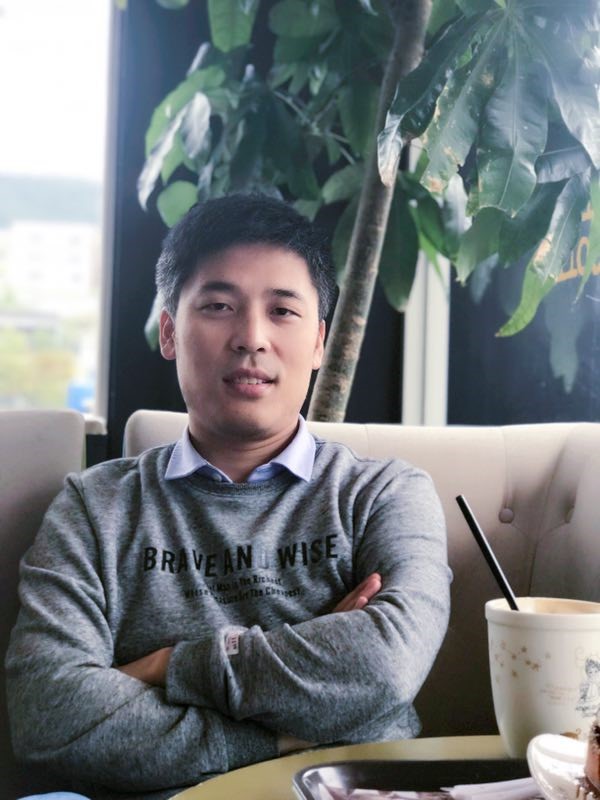
Prof. Fei Hao
Shaanxi Normal University, China
Research area:Social Computing, Pervasive Computing, Big Data Analytics
Profile: Dr. Hao received his Ph.D. degree in Computer Science and Engineering from Soonchunhyang University, South Korea, in 2016. Since 2016, he has been with Shaanxi Normal University, Xi'an, China, where he is an Associate Professor. From 2020 to 2022, he was a Marie Curie Fellow with the University of Exeter, Exeter, United Kingdom. His research interests include social computing, soft computing, big data analytics, pervasive computing, and data mining.
Title:Concept-cognitive Learning for Social Network Analysis
Abstract: The characteristics of the massive social media data, diverse mobile sensing devices as well as the highly complex and dynamic user’s social behavioral patterns have led to the generation of huge amounts of high dimension, uncertain, imprecision, and noisy data from social networks. Thanks to the emerging soft computing techniques, unlike conventional hard computing, which are widely used for coping with the tolerance of imprecision, uncertainty, partial truth, and approximation. One of the most important and promising applications is social network analysis (SNA) which is the process of investigating social structures and relevant properties through the use of network and graph theories. In this talk, a novel concept-cognitive learning paradigm for social network analysis will be introduced. Specifically, the representation model of Social Networks using Formal Concept Analysis (FCA) is introduced first. Then, some of our latest research works on topological structures mining and analysis in Social Networks based on concept interestingness are presented. Finally, the relevant FCA-based SNA software packages are summarized.

Prof. Wei Wei
Xi'an University of Technology,China
Research Area: Big Data, Artificial Intelligence, Internet of Things project
Profile: In 2011, he graduated from Xijiao University with a doctor's degree in computer science. In 2013, he won a post doctoral degree from UNL University in the United States. In 2015, he completed the post doctoral research in electrical engineering of Xi'an University of Technology; In 2017, he visited the Computer Department of the University of Texas at Dallas and completed his post doctoral research. It has been researching from the Internet of Things, artificial intelligence, big data processing and other related aspects.
In 2019 and 2020, the first author respectively won the second prize of Shaanxi University Science and Technology Progress Award. The first author published more than 20 high-level papers included in SCI journals, including ESI highly cited (continued to be highly cited for more than 56 months, ESI-2019, 2020 and 2021 highly cited) and 19 hot articles (the top 0.1% in the world), and 8 papers in JCR-1 and CCF B international journals
Title:Based on IoTs Parking Navigation with Continuous Information Potential Field research
Abstract: As Internet of Things(Iots ) are increasingly being deployed in some important applications, it becomes imperative that we consider application requirements in in-network processes. We intend to use a WSN to aid information querying and navigation within a dynamic and real-time environment. We propose a novel method that relies on the heat diffusion equation to finish the navigation process conveniently and easily. From the perspective of theoretical analysis, our proposed work holds the lower constraint condition. We use multiple scales to reach the goal of accurate navigation. We present a multi-scale gradient descent method to satisfy users’ requirements in WSNs. Formula derivations and simulations show that the method is accurately and efficiently able to solve typical sensor network configuration information navigation problems. Simultaneously, the structure of heat diffusion equation allows more flexibility and adaptability in searching algorithm designs.

Prof. Yingying LI
Hong Kong University of Science and Technology, China
Research Area: Statistical Learning, Individualized Asset Allocation、Financial Big Data, Large Portfolio Analysis、Volatility Modeling, Volatility Estimation, Volatility Prediction、High-frequency and High-dimensional Data
Profile: Yingying Li is Professor at the Department of Information System, Business Statistics and Operations Management (ISOM) and the Department of Finance at Hong Kong University of Science and Technology (HKUST). Before joining HKUST, Dr. Li also held positions as lecturer and postdoctoral fellow at the Bendheim Center for Finance and the Operations Research and Financial Engineering department at Princeton University. Dr. Li received her Ph. D in Statistics from the University of Chicago.
Dr. Li's research focuses on high-dimensional and/or high-frequency financial data, volatility estimation and prediction, market microstructure, large portfolio optimization, individualized financial decision making, etc. Dr. Li has published on top journals in statistics, finance and economics, such as Econometrica, Review of Financial Studies, Journal of Financial Economics, Annals of Statistics, Journal of American Statistical Association, Journal of Econometrics.
Dr. Li is an elected fellow of the Society for Financial Econometrics (SoFiE), and NSFC Excellent Young Scientist (EYS Hong Kong and Macau). She is an associate editor for the Journal of Econometrics, Journal of Business & Economic Statistics and Journal of Financial Econometrics; and serves as a council member for the Society for Financial Econometrics.
Title:Financial Big Data and Robo-Advising
Abstract: This talk covers portfolio optimization, risk management and individualized asset allocation with innovative yet statistically sound methodologies based on financial big data.

Assoc. Prof. Jayalakshmy Ramachandran
University of Nottingham Malaysia
Research Area: Governance and Ethics, Risk Management and Forensic Audit
Profile: Jayalakshmy is Associate Professor of Auditing and Accounting in University of Nottingham Malaysia. A chartered Accountant by profession, she has been in academics since 2000. Prior to this she was attached to the audit industry for 7 years. She is a Fellow of the Institute of Chartered Accountants of India and a registered member of the Malaysian Institute of Accountants. Her research interests include Financial Reporting and disclosures, Audit, Corporate governance and ethics, Forensic accounting and reporting and business sustainability. She has won numerous awards for her innovative research ideas. She presents regularly at international and local conferences. She has conducted number of executive training programmes on sustainable organisations and ethical practices for government agencies as well as private organisations. Recently she was involved in a sustainability pulse survey project in partnership with United Nations Global Compact Network Malaysia and Brunei (UNGCMYB) which was successfully launched in September 2022.
Title:Risk governance and data governance for effective management
Abstract: Risk Governance, a new and latest addition in risk management and governance refers to the role of good governance practices by companies in risk identification, assessment, management, and communication process. At the same time technology plays a very important role for companies in providing high volume data, both structured and unstructured, gathered from public and organisation’s key stakeholders, termed as big data. For good governance, data aids by increasing efficiency of tasks, as there is a proper assessment of tasks and people involved. While big data provides the much-needed support system like unique competitive advantage, improved productivity and Internet of Things, the risks of big data including data security, data breaches, cyber-attacks and data abuse pose a great challenge to management policies and decisions. This demands a need to have a strong framework for data governance and risk governance which could then contribute to sustainable practices through effective management.